

Managed IT Services in Salem, MA
IT Support built for a city that runs on its own terms
Schedule Your IT Assessment
Salem runs on a calendar that most IT providers don’t understand. October isn’t just the busiest month for Salem’s creative, tourism, and experiential businesses — for many of them, it represents 40 percent or more of annual revenue concentrated into 31 days. Ghost tour operators, experiential entertainment venues, boutique retailers, and hospitality businesses all operate at extraordinary capacity during Haunted Happenings, when hundreds of thousands of visitors arrive in a city of 45,000. The IT infrastructure serving these businesses needs to handle that surge reliably, process a year’s worth of transactions in a month, and keep running when there’s no time to deal with a system failure.
The rest of the year, Salem operates on its own rhythm. The Peabody Essex Museum, one of the country’s premier art and culture institutions, anchors a year-round cultural economy alongside heritage tourism, the Salem State University community, and the North Shore professional services market serving residents across Salem, Marblehead, Beverly, and the surrounding communities. Salem’s healthcare and social services sector serves a North Shore population that includes mental health practices and substance use treatment organizations with specific federal data protection obligations for certain categories of patient records. These are year-round organizations with IT requirements that exist entirely independently of October.
Whether your business is a creative, experiential, or tourism enterprise preparing for an October that defines your financial year, a cultural institution or nonprofit managing collections, programs, and visitor operations year-round, a healthcare practice, mental health organization, or substance use treatment provider serving Salem’s North Shore community, or a professional services firm, financial advisor, or commercial business serving the North Shore residential market, SII builds an IT program around what your Salem organization actually requires.

What IT Failure Costs Salem's Businesses and Organizations
Salem’s IT failure scenarios are unlike most Massachusetts cities because the stakes are concentrated so heavily into a single month. A booking platform that goes down in the third week of September — when tour operators and experiential venues are processing the advance reservations that fill October capacity — doesn’t just create a bad day. It creates a bad October. And for a Salem creative or experiential business, a bad October can mean a bad year.
- Booking and reservation platform failures in September and October when Salem's tour operators, escape rooms, ghost tours, and event venues depend on online reservations to fill their highest-revenue weeks, with customer losses that no amount of walk-in traffic can recover
- Point-of-sale outages during Haunted Happenings when Salem's retail, hospitality, and experience businesses are processing their highest transaction volumes of the year, in a month when every lost sale represents a disproportionate share of annual revenue
- 42 CFR Part 2 violations at Salem's substance use treatment organizations, where federal law imposes confidentiality protections for substance use disorder records that are stricter than standard HIPAA requirements and carry specific criminal penalties for unauthorized disclosure
- Collections management and digital asset system failures at cultural institutions, where artwork location records, loan documentation, condition reports, and conservation histories are irreplaceable operational records that support everything from insurance valuation to exhibition planning
- Ransomware attacks on Salem's creative and experiential businesses, many of which have grown rapidly during Salem's tourism boom but haven't built the IT security infrastructure that matches their current revenue exposure
SII builds IT programs for Salem’s diverse business community that address both the peak-season performance demands of October and the year-round compliance and operational requirements that Salem’s cultural, healthcare, and professional organizations carry.
Why Salem Businesses Choose Managed IT Services

IT Ready for October Before October Arrives
Salem’s creative and experiential businesses don’t get a second chance at October. We build IT programs with the annual planning calendar that Salem’s tourism economy requires: systems tested and verified before September booking season opens, booking and POS platforms confirmed at full capacity before the first weekend of October, and monitoring intensified through the month so that problems are caught and resolved before they affect a business operating at maximum capacity.

IT for Salem's Creative and Experiential Economy
Ghost tours, haunted attractions, escape rooms, occult retailers, artisan makers, galleries, and the experiential businesses that define Salem’s identity have IT requirements shaped by their unique operating model — online booking systems that need to handle sudden reservation surges, point-of-sale that works reliably during high-volume October days, and cybersecurity appropriate to businesses whose digital presence and online reputation are core to how they attract visitors.

Cultural Institution IT for Collections and Visitor Operations
Museums and cultural organizations manage collections management systems, visitor ticketing and digital platforms, retail operations, event management, and institutional administration with IT requirements that differ meaningfully from commercial businesses. We support cultural organizations with IT built for the specific combination of mission-critical collections records, public-facing visitor systems, and the security appropriate to an institution holding significant cultural and financial assets.

42 CFR Part 2 and HIPAA for North Shore Healthcare and Social Services
Mental health practices, substance use treatment organizations, and behavioral health providers in Salem carry dual compliance obligations: HIPAA for all healthcare records and the more stringent federal confidentiality requirements of 42 CFR Part 2 for substance use disorder records, which restrict disclosure more strictly than standard HIPAA and carry specific federal penalties for violations. We build IT environments that satisfy both frameworks simultaneously.

North Shore Professional Services IT
Law firms, financial advisory practices, real estate agencies, accounting firms, and professional services businesses serving the North Shore residential market across Salem, Marblehead, Beverly, and Swampscott need IT that protects client confidentiality, meets their professional compliance obligations, and works reliably without requiring a managing partner or practice owner to think about it. We build structured managed IT for the North Shore professional community at costs that fit the market.

Year-Round Heritage Tourism IT Baseline
Salem’s tourism economy operates twelve months a year, not just in October. Historic district businesses, maritime heritage attractions, galleries, and the restaurants and hospitality businesses serving year-round visitors need IT that performs reliably through every season, with the monitoring and support that keeps operations smooth whether it’s a quiet February Tuesday or a packed October Saturday.
What Makes SII Different From Typical IT Support in Salem?
Salem’s businesses and organizations plan around planning cycles that most IT providers don’t account for. Creative and experiential businesses plan around September booking windows, October execution, and the post-season analysis that drives next year’s investments. Cultural institutions plan around exhibition cycles, loan agreements, capital campaigns, and the grant award timelines that fund their operating programs. Healthcare and social services organizations plan around program funding renewals. Professional services firms plan around residential market growth and practice expansion. We build technology roadmaps calibrated to each organization’s specific planning rhythm, with investments sequenced around the calendar that actually governs each business.
For Salem’s experiential businesses, the timing of a recurring IT problem is as important as the problem itself. A recurring booking system glitch in February is a nuisance. The same glitch in October is a revenue event in a month when every missed reservation costs more than it would in any other month of the year. For a cultural institution, a recurring problem in the collections management system may affect loan documentation, exhibition installation timelines, or insurance compliance. We permanently fix the underlying cause of recurring problems, with priority given to any issue that could affect the weeks or systems that matter most to each client.
Salem’s organizations carry a layered compliance landscape. Substance use treatment organizations navigate 42 CFR Part 2’s federal confidentiality requirements alongside HIPAA, creating a dual compliance obligation that standard HIPAA programs don’t fully address. Mental health practices carry HIPAA obligations with specific considerations for sensitive behavioral health records. Creative and hospitality businesses processing payment cards face PCI DSS requirements for cardholder data. Commercial businesses handling Massachusetts personal information face 201 CMR 17.00. Cultural institutions carry specific data governance obligations for collections records and donor information. We address all of these within the managed IT program.
Salem’s business owners and organizational leaders need IT reviews that connect technology to the specific planning and financial cycles that drive their decisions. Experiential business owners want a fall review that captures what worked in October and what changes before the next season. Cultural institution executive directors want IT reporting that connects to their collections stewardship and operational responsibilities. Healthcare and social services administrators need compliance documentation for regulatory reporting and grant renewal. North Shore professional services owners need clear, direct reporting that helps them make technology decisions without becoming IT experts.
Our Managed IT Services in Salem, MA
24/7 Infrastructure Monitoring
Continuous monitoring of the booking systems, point-of-sale platforms, collections management infrastructure, electronic health records, and professional services applications that Salem’s experiential, cultural, healthcare, and commercial organizations depend on, with monitoring intensity elevated through September and October when Salem’s tourism and experiential businesses are operating at maximum capacity and system availability is most critical.
Advanced Cybersecurity Controls
Security built for Salem’s specific compliance and risk environment: 42 CFR Part 2-aware access controls and audit logging for substance use treatment organizations protecting federal-law-governed patient records, HIPAA endpoint and network security for mental health practices and community healthcare, PCI DSS cardholder data controls for hospitality and retail businesses processing high October transaction volumes, collections data protection for cultural institutions, and ransomware defenses for the creative and experiential businesses that form Salem’s commercial identity.
Cloud Strategy & Management
Online booking, reservation management, and event platform cloud for Salem’s experiential and tourism businesses, digital asset management and visitor-facing platform cloud for cultural institutions, electronic health record and practice management cloud for North Shore healthcare organizations, and Microsoft 365 implementation for professional services firms, nonprofits, and commercial businesses across the city.
Network & Connectivity Governance
Reliable network infrastructure for Salem’s businesses, including the connectivity challenges that come with operating in historic buildings in Salem’s core commercial district where infrastructure constraints require creative network design, multi-building cultural institution campus connectivity, healthcare multi-site connectivity across North Shore practice locations, and secure, consistent access for professional services firms serving the surrounding residential communities.
Business Application Support
Setup and management of the online booking, ticketing, and point-of-sale platforms that Salem’s experiential and tourism businesses depend on through October and year-round, collections management systems for cultural institutions, electronic health record and practice management systems for North Shore healthcare and behavioral health organizations, and the legal practice management, financial advisory, and real estate platforms used by Salem’s professional services community.
Remote Workforce Enablement
Secure device management and access controls for cultural institution staff working across multiple buildings and remote locations, healthcare staff working across North Shore clinical sites, professional services employees working from client locations and home offices across Salem and the surrounding communities, and the temporary and seasonal staff that Salem’s experiential businesses bring on each October to handle surge volume.
VoIP & Unified Communications
Business communications for Salem’s experiential businesses managing customer inquiries and reservations, cultural institutions coordinating visitor services and administrative communications across departments and buildings, mental health and healthcare practices running patient scheduling and clinical coordination lines, and the professional services firms and commercial businesses serving the North Shore residential and commercial community.
Data Backup & Disaster Recovery
Automated, tested backup and recovery for Salem’s regulated and mission-critical data: 42 CFR Part 2 and HIPAA-compliant records backup for substance use treatment and mental health organizations, irreplaceable collections management records for cultural institutions backed up with the redundancy and tested recovery appropriate to their significance, PCI DSS transaction log retention for experiential and hospitality businesses, 201 CMR 17.00-supporting data backup for commercial organizations, and business continuity infrastructure for professional services firms.
Ready to Get Started?
Our Managed IT Operating Model
1
Assess
We review your full IT environment without disrupting active tourism operations, patient care, or organizational activity. For Salem’s experiential and tourism businesses, this includes assessing your booking platforms, point-of-sale systems, and online presence against the surge capacity demands of October. For substance use treatment organizations, we conduct a 42 CFR Part 2 compliance gap assessment alongside the standard HIPAA technical safeguard review. For cultural institutions, we document collections management system security and access governance. For all Salem clients, you receive a plain-language written summary before we recommend anything.
2
Strategize
We build a technology plan calibrated to each Salem organization’s specific planning rhythm. For creative and experiential businesses, the plan centers on a September booking season readiness timeline, an October surge management protocol, and a post-season improvement window in November through March when changes can be made without disrupting active operations. For cultural institutions, the plan aligns to exhibition cycles and grant award timelines. For healthcare and social services, it accounts for program funding renewals. For professional services firms, it reflects North Shore residential market growth and practice expansion.
3
Stabilize
We close the highest-priority gaps first, with particular attention to anything that could affect October performance or create compliance exposure before the next tourism season or audit cycle. For experiential businesses, booking platform reliability and payment processing resilience come first. For substance use treatment organizations, 42 CFR Part 2-compliant access controls and audit logging are the immediate priority. For mental health practices and community healthcare, HIPAA technical safeguards are addressed first. For cultural institutions, collections management system security and backup integrity are closed before other improvements. For all Salem clients, a stable baseline is reached before ongoing management begins.
4
Protect & Manage
Ongoing monitoring, security management, help desk support, and vendor coordination throughout the year, with monitoring intensity intentionally elevated through September and October for clients whose operations peak during that period. For substance use treatment organizations, access governance for 42 CFR Part 2-protected records is monitored continuously. For cultural institutions, collections management system availability is tracked with the same priority as any business-critical system. October problems are treated with the urgency of a financial event, not a routine IT ticket.
5
Optimize & Review
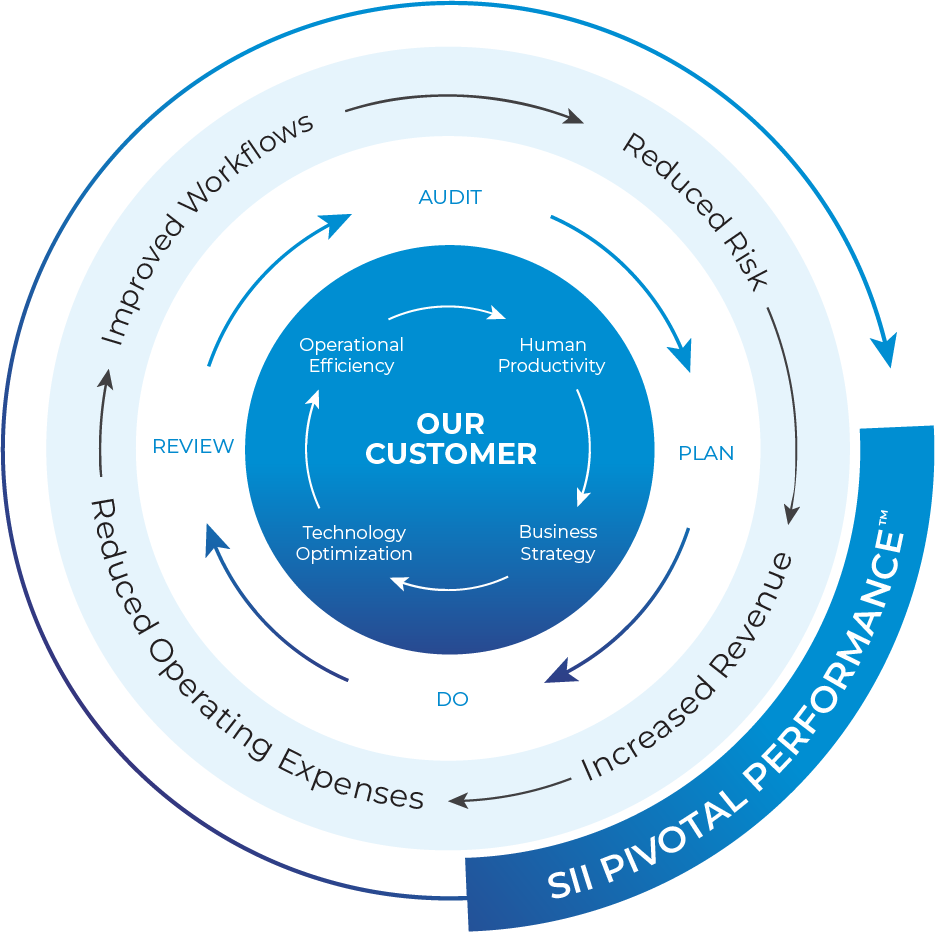
Post-October reviews for Salem’s experiential and tourism businesses capture what worked during the season, what created problems, and what needs to change before the following year. For cultural institutions, reviews align to exhibition cycles and include collections system performance reporting. For healthcare and social services organizations, reviews include the compliance documentation that regulatory reporting and grant renewal applications require. For all Salem clients, reviews are direct, planning-useful, and timed to the specific calendar that governs each organization’s year.
Serving Businesses and Organizations Across Salem and the North Shore
SII provides managed IT services in Salem and throughout the surrounding North Shore communities, with structured remote management covering your environment continuously and on-site engineering available for infrastructure projects, hardware installations, and situations that require a physical presence. We regularly work with organizations across:
- Salem’s downtown historic core, Essex Street, Derby Street, and the Pickering Wharf waterfront — where the experiential businesses, galleries, retail shops, restaurants, cultural attractions, and hospitality operations that define Salem’s identity are concentrated
- The Washington Square, Peabody Essex Museum, and Salem State University areas, and the medical and professional services corridors where cultural institutions, healthcare practices, social services organizations, and professional services firms serve Salem’s residential and institutional community
- Marblehead, Beverly, Swampscott, Peabody, and Danvers — the surrounding North Shore communities where Salem-based professional services firms serve clients, where healthcare practices extend their reach across the North Shore patient population, and where the residential prosperity that supports Salem’s commercial economy is concentrated
Salem is a city that operates on its own terms, with its own calendar, its own identity, and its own set of businesses that have built their operations around a community unlike any other in New England. The IT providers built around Greater Boston’s corporate and institutional market don’t always understand what it means to run a business in a city where October changes everything. We build IT programs for Salem’s businesses based on their actual operating reality, the compliance obligations their specific industries carry, and the planning calendar that governs how they make decisions about their future.
Schedule a free IT assessment and find out what a properly structured managed IT program would look like for your Salem organization.
FAQs
We're a substance use treatment organization in Salem. How does 42 CFR Part 2 affect our IT requirements?
42 CFR Part 2 — the federal regulation governing the confidentiality of substance use disorder patient records — imposes confidentiality protections that are stricter in important ways than standard HIPAA. Under 42 CFR Part 2, records identifying a person as having or seeking substance use disorder treatment cannot be disclosed without specific written patient consent, even to other healthcare providers, except in a narrow set of emergency circumstances. The prohibition on re-disclosure is also more stringent — once a record has been shared with another party under a 42 CFR Part 2-compliant consent, that party is also bound by the same restrictions on further disclosure. In an IT context, this means that the access controls for 42 CFR Part 2-protected records must be more granular than a standard healthcare access control policy — the system must be able to distinguish between substance use disorder records and other health records, control access to them separately, and audit that access with the specificity needed to demonstrate compliance. We build IT environments for Salem’s substance use treatment organizations that implement these controls as a standard part of the managed IT program, not as a specialized compliance project added after the fact.
How does SII plan IT for a Salem experiential business so that October runs without problems?
The key difference between Salem’s October and a typical seasonal business challenge is the concentration. For many Salem experiential businesses, October represents more of their annual revenue in 31 days than some businesses generate in a quarter. That means the stakes of an IT failure during October are qualitatively different from a failure at any other time of year. Our approach is to work backward from October 1 with a readiness calendar that starts in late summer. By August, we want every booking platform and point-of-sale system confirmed as tested and performing. By early September, when advance reservations for October start driving the revenue that fills the month, every system that touches customer transactions should be verified and monitored. During October itself, monitoring for booking, POS, payment processing, and any online customer-facing platform is elevated, and any issue affecting customer-facing systems is treated as a priority response. After October, we conduct a review that documents what worked, what created problems, and what investments would reduce risk the following year.
What does IT look like for a museum or cultural institution in Salem?
Museums and cultural institutions have an IT profile that differs from both commercial businesses and standard nonprofits. The collections management system is the most critical business application — it’s where artwork location records, provenance documentation, condition reports, loan agreements, conservation histories, and acquisition records are maintained, and it’s irreplaceable in a way that most business databases aren’t. Collections management data needs to be backed up with the redundancy and tested recovery that matches its significance, and the access controls for the system need to reflect both the sensitivity of the data and the different roles that curators, registrars, conservators, and administrators play in accessing it. Beyond collections management, cultural institutions manage visitor ticketing and digital platforms, retail point-of-sale, donor databases, event management systems, and administrative operations — all of which need to work reliably during programming periods when the institution is most publicly visible. We build and manage IT for cultural institutions that treats the collections management system as the foundation and builds reliable infrastructure for all the operational systems around it.
What cybersecurity risks do Salem's creative and experiential businesses face?
Salem’s creative and experiential businesses — ghost tours, escape rooms, haunted attractions, artisan retailers, galleries, and occult businesses — have grown rapidly during Salem’s tourism boom, and many of them have built their operations with IT that worked when they were smaller but hasn’t kept pace with their current revenue exposure. The specific risks that matter most for these businesses are business email compromise, where fraudulent invoices or payment redirection schemes target businesses that handle significant transaction volumes without the financial controls that larger businesses have; ransomware, where a data encryption attack during October would be catastrophic for businesses at maximum capacity and maximum revenue exposure; and booking platform vulnerabilities, where an attack on the reservation system that fills October capacity could cost far more than the attack would at any other time of year. We build security programs for Salem’s creative and experiential businesses that address these risks at a scale and cost that matches the reality of independent small businesses, not enterprise clients.
Does SII serve professional services firms in Marblehead, Beverly, and the surrounding North Shore communities?
Yes. Many Salem-based professional services businesses — law firms, financial advisory practices, real estate agencies, and accounting firms — serve clients across the North Shore communities of Marblehead, Beverly, Swampscott, Peabody, and Danvers, and some maintain satellite offices or work regularly in those communities. We manage those environments as part of a unified IT program, with consistent security policies, centralized monitoring, and the same support quality regardless of which North Shore location is involved. For professional services firms with client confidentiality obligations, remote access security is a compliance matter as well as an operational one, and we configure remote access for professionals working across multiple North Shore locations and from home offices with the same attention to access control and endpoint security as the primary office.
October Comes Every Year. Make Sure Your IT Is Ready for It.
Get a free IT assessment for your Salem organization. We’ll evaluate your current environment, identify what needs to change before the season opens, and build a plan that keeps your business running reliably through the month that matters most — and compliantly through the other eleven.