

Managed IT Services in Waterbury, CT
IT for Waterbury’s manufacturers, dual health system community, Naugatuck Valley businesses, and the professional and commercial organizations serving Connecticut’s Brass City.
Schedule Your IT Assessment
Waterbury is Connecticut’s fifth-largest city and the anchor of the Naugatuck Valley, a manufacturing corridor that produced more brass, more clocks, and more precision metal components than almost any region its size in American history. That manufacturing heritage persists in working precision fabricators, specialty metal businesses, and industrial operations that carry the operational IT requirements of real production environments and the cyber insurance security controls of commercial businesses that have never had formal IT programs. The Route 8 and I-84 interchange makes Waterbury accessible to Hartford, Danbury, and the New Haven market simultaneously.
The healthcare picture in Waterbury is unusual: Saint Mary’s Hospital, part of Trinity Health of New England, and Waterbury Hospital, now affiliated with Hartford HealthCare, serve the same city from two competing major health systems. Practices in Waterbury may be affiliated with either network, each carrying distinct HIPAA data sharing obligations. Federally qualified health centers serving Waterbury’s large Puerto Rican, Latino, and immigrant community carry HRSA Health Center Program compliance requirements alongside HIPAA. SII builds programs for Waterbury’s manufacturers, healthcare organizations, community health providers, and professional services firms around what each actually carries.

What IT Failure Costs Waterbury Organizations
Waterbury’s manufacturers, healthcare organizations, community health centers, and professional services firms carry compliance obligations and operational vulnerabilities where reactive IT creates risks that grow more consequential as cyber insurance requirements and regulatory frameworks tighten around them.
- Ransomware attacks on Waterbury's Naugatuck Valley manufacturers that operate without validated backup, encrypting production records, job histories, estimating data, and customer files and leaving the business unable to recover operations without paying or rebuilding while customer delivery commitments run
- Business email compromise losses at Waterbury's manufacturers and commercial businesses when fraudulent payment redirection attacks target accounts payable flows, exploiting unprotected business email accounts to redirect supplier invoice payments or customer deposits to attacker-controlled accounts before the fraud is identified
- HIPAA incidents at Saint Mary's-affiliated or Hartford HealthCare-affiliated practices and independent healthcare providers in Waterbury when patient records lack the access controls and encrypted communications that federal healthcare privacy law requires, triggering notification obligations and community trust damage
- HRSA Health Center Program compliance failures at Waterbury's federally qualified health centers when IT systems supporting Uniform Data System reporting, patient eligibility tracking, and grant-funded program documentation do not meet the data governance and availability standards that HRSA oversight requires
- Client data exposure at Waterbury's professional services firms when client records accumulated in a busy city legal, financial, and commercial professional services market are inadequately protected, triggering Connecticut professional conduct sanctions and the trust damage that follows in a community where professional relationships are built across neighborhoods and generations
SII builds IT programs for Waterbury’s organizations that address these specific risks at costs appropriate to the Naugatuck Valley market.
Why Waterbury Organizations Choose Managed IT Services

Operational IT for Naugatuck Valley Manufacturers
Precision fabricators, specialty metal manufacturers, and industrial businesses in Waterbury’s manufacturing community carry the operational IT requirements of production environments where ERP, production scheduling, and business operations need to stay available through working shifts. They also carry cyber insurance minimum security controls and business email compromise exposure on payment flows that working manufacturers have historically underestimated. We build right-sized managed IT for Waterbury’s manufacturing community at costs that fit the Brass City market.

HIPAA for a Dual Health System Community
Waterbury’s healthcare practices navigate an unusual situation: Saint Mary’s Hospital (Trinity Health of New England) and Waterbury Hospital (Hartford HealthCare) serve the same city from two different major health systems. A practice affiliated with Saint Mary’s carries Trinity Health HIPAA data sharing obligations. A practice affiliated with Waterbury Hospital carries Hartford HealthCare HIPAA data sharing obligations. Independent practices carry their own HIPAA technical safeguard requirements. We build HIPAA-compliant IT for each configuration Waterbury’s healthcare community presents.

IT and HRSA Compliance for Federally Qualified Health Centers
Waterbury’s federally qualified health centers carry HIPAA alongside HRSA Health Center Program requirements, including Uniform Data System reporting obligations, patient eligibility and sliding scale documentation, grant-funded program tracking, and the data governance obligations of Section 330 grantees. These organizations serve Waterbury’s large immigrant and working-class community with limited IT resources. We build right-sized IT programs for Waterbury’s community health organizations that satisfy both HIPAA and HRSA compliance requirements.

IT for Community Health and Social Services Organizations
Nonprofits, community health organizations, and social services providers serving Waterbury’s diverse residential community carry donor data protection obligations, grant compliance IT requirements, and the practical IT needs of mission-driven organizations that handle the data of vulnerable populations with limited dedicated IT capacity. We build managed IT for Waterbury’s community organization sector at costs appropriate to nonprofit and community health budgets.

Professional Services IT for Waterbury's Legal and Commercial Community
Law firms serving the Waterbury Superior Court, accounting practices, insurance agencies, financial advisors, and professional services firms operating in Connecticut’s fifth-largest city carry Connecticut professional conduct data security obligations, cyber insurance requirements, and the practical IT needs of professional practices serving a large and commercially active urban community. We build structured managed IT for Waterbury’s professional services community.

IT for Waterbury's Route 8 Corridor Commercial Businesses
Retail businesses, restaurants, commercial employers, and small businesses along Waterbury’s commercial corridors carry PCI DSS obligations for payment card processing, Connecticut data protection requirements, and the cyber insurance security minimums that commercial insurers now require. We provide practical managed IT for Waterbury’s working commercial community at costs that fit the Naugatuck Valley market.
What Makes SII Different?
Our Managed IT Services in Waterbury, CT
24/7 Infrastructure Monitoring
Continuous monitoring of manufacturing production and operational systems, healthcare EHR and practice management platforms for both Trinity Health and Hartford HealthCare-affiliated practices, community health center patient management and HRSA reporting systems, professional services practice management, and commercial business operations across Waterbury, with issue detection calibrated to production shifts, clinical hours, program schedules, and the compliance obligations of each organization.
Advanced Cybersecurity Controls
Security built for Waterbury’s compliance landscape: BEC defenses and endpoint protection for manufacturers exposed to payment flow fraud, HIPAA endpoint and network security with health system-specific data flow governance for Saint Mary’s-affiliated and Waterbury Hospital-affiliated practices, HRSA-supporting access controls and audit logging for federally qualified health centers, Connecticut professional conduct data protection for professional services firms, and PCI DSS cardholder data controls for commercial businesses.
Cloud Strategy & Management
Production management and operations cloud for Waterbury’s manufacturing businesses, EHR and practice management cloud for Trinity Health and Hartford HealthCare-affiliated healthcare practices, patient management and grant program tracking cloud for community health organizations, legal and professional advisory platforms for professional services firms, and Microsoft 365 and productivity cloud for commercial businesses and nonprofits throughout the Naugatuck Valley.
Network & Connectivity Governance
Reliable network infrastructure for Waterbury’s manufacturing facilities, healthcare practice offices, community health center facilities, professional services firms, and commercial businesses across the Route 8 and I-84 corridors and Waterbury’s downtown and neighborhood commercial areas, with the access controls, segmentation, and monitoring that HIPAA, HRSA program requirements, cyber insurance, and Connecticut data protection demand.
Business Application Support
Setup and management of ERP, production scheduling, and job management systems for manufacturers, EHR and practice management for Trinity Health and Hartford HealthCare-affiliated practices, patient management and Uniform Data System reporting platforms for community health centers, legal practice management and financial advisory platforms for professional services firms, and commercial POS and business applications for Waterbury’s retail and commercial community.
Remote Workforce Enablement
Secure device management and access controls for Waterbury’s manufacturing engineers and supervisors, healthcare practitioners serving patients across Naugatuck Valley locations, community health workers providing services in Waterbury’s neighborhoods, professional services staff working from client offices and home offices, and commercial employees with remote access requirements across the greater Waterbury market.
VoIP & Unified Communications
Business communications for Waterbury’s manufacturing operations coordinating production and commercial teams, healthcare practices running patient scheduling and care coordination for both Trinity Health and Hartford HealthCare network patients, community health organizations managing care coordination and program outreach in multiple languages, and the professional services firms and commercial businesses serving Waterbury’s large urban community.
Data Backup & Disaster Recovery
Automated, tested backup for Waterbury’s compliance-sensitive data: production records and job data backup for manufacturers with tested recovery procedures, HIPAA-compliant patient record retention for healthcare practices, HRSA Health Center Program-compliant backup for patient management and grant documentation at community health centers, attorney-client records backup for professional services firms, and Connecticut data protection-compliant backup for commercial and nonprofit organizations.
Ready to Get Started?
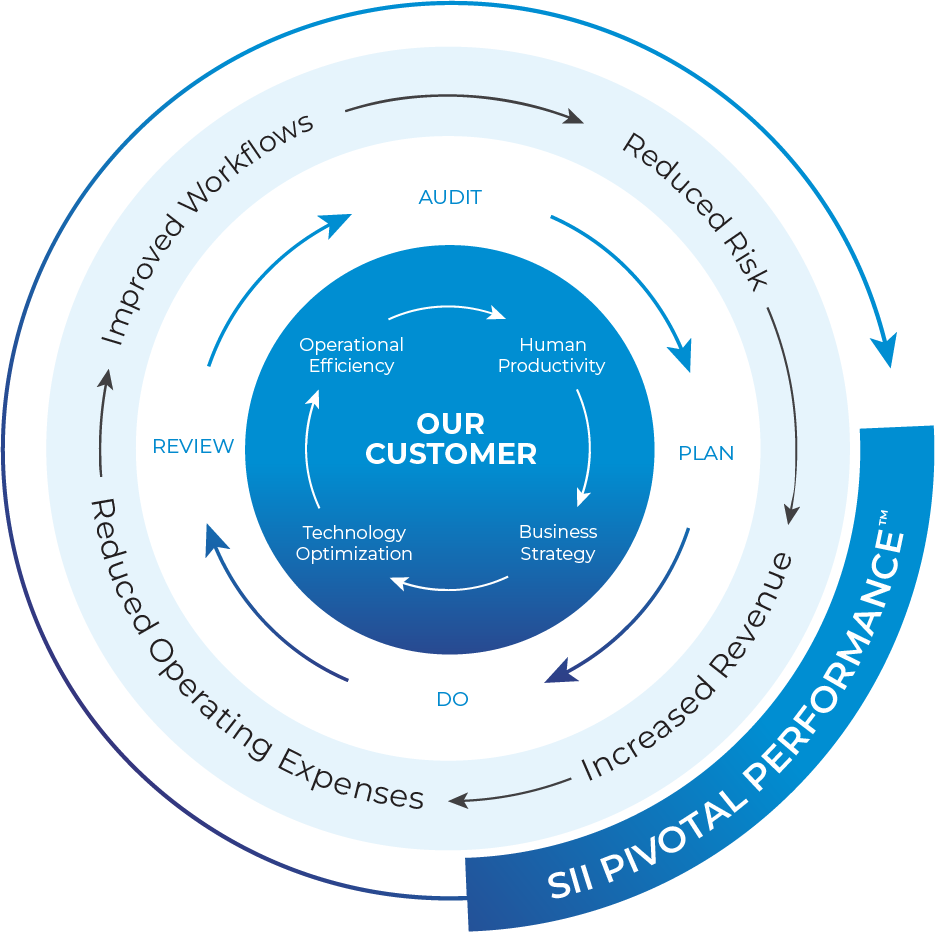
Our Managed IT Operating Model
1
Assess
We review your full IT environment with attention to the compliance dimensions specific to your organization. For manufacturers, we assess operational system security and the baseline against cyber insurance requirements and BEC exposure. For healthcare practices, we identify which health system affiliation applies and assess HIPAA technical safeguards accordingly: Trinity Health data sharing configurations for Saint Mary’s-affiliated practices, Hartford HealthCare configurations for Waterbury Hospital-affiliated practices. For community health centers, we assess both HIPAA and HRSA Health Center Program IT requirements. For professional services firms, we assess Connecticut professional conduct compliance. Every Waterbury client receives a plain-language written summary before we recommend anything.
2
Strategize
We build a technology plan calibrated to each Waterbury organization’s planning cycle. Manufacturers plan around equipment investment and cyber insurance renewals. Healthcare practices plan around patient volume and health system network integration. Community health organizations plan around HRSA grant cycles and program expansion. Professional services firms plan around caseload and succession. Commercial businesses plan around operational growth. The plan is cost-transparent and specific to Waterbury’s Naugatuck Valley market economics.
3
Stabilize
We close the highest-priority gaps first. For manufacturers, that means MFA on business email, endpoint protection, and validated backup with tested recovery: the three controls that address the BEC and ransomware threats most likely to affect a Waterbury industrial business. For healthcare practices, it means HIPAA technical safeguards and the health system network data flow controls appropriate to the specific affiliation. For community health centers, it means HIPAA technical safeguards and the access controls that HRSA program documentation requires. For professional services firms, it means client data protection and Connecticut professional conduct compliance.
4
Protect & Manage
Ongoing monitoring, security management, help desk support, compliance maintenance, and vendor coordination. For manufacturers, production systems are monitored through working shifts and BEC defenses are maintained on business email. For healthcare practices, HIPAA compliance is maintained continuously for the appropriate health system affiliation. For community health organizations, HRSA program documentation systems are monitored and HIPAA compliance is maintained. For all Waterbury clients, IT is handled by our team without requiring the production manager, practice administrator, health center director, or business owner to troubleshoot.
5
Optimize & Review
Regular reviews that give Waterbury’s manufacturing owners, practice managers, health center directors, firm principals, and business owners the compliance documentation and IT performance reporting they need. Manufacturers receive cyber insurance security posture evidence and BEC risk reporting. Healthcare practices receive HIPAA compliance status specific to their health system affiliation. Community health organizations receive HRSA-relevant IT documentation for grant reporting. Professional services firms receive Connecticut professional conduct compliance evidence. We update the technology plan as each Waterbury organization grows.
Serving Organizations Across Waterbury and the Naugatuck Valley
SII provides managed IT services across Waterbury and the surrounding Naugatuck Valley communities, with structured remote management covering your environment continuously and on-site engineering available from our Wallingford headquarters, approximately 25 minutes from Waterbury via I-691 and I-84. We regularly work with organizations across:
- Downtown Waterbury along Grand Street and Bank Street, the Saint Mary’s Hospital and Waterbury Hospital campus areas, the community health center and social services facilities serving Waterbury’s neighborhoods, and the manufacturing and industrial areas where the Brass City’s production economy continues to operate
- The Route 8 corridor connecting Waterbury south through Naugatuck, Ansonia, Derby, and Shelton toward Bridgeport and north through Thomaston and Torrington toward Litchfield County, where Waterbury-based manufacturers and commercial businesses serve the full length of Connecticut’s industrial valley
- Naugatuck, Ansonia, Derby, Wolcott, Prospect, and the surrounding Naugatuck Valley communities, as well as Southington, Cheshire, and Meriden, where Waterbury-based organizations serve clients and where the working commercial economy anchored by Connecticut’s fifth-largest city extends throughout the central and western Connecticut market
Waterbury has been underserved by the managed IT market for the same reason it has been underserved by a lot of markets: it is not Hartford, and it is not New Haven, and providers built around those two cities have treated Waterbury as a secondary market at best. A city of 115,000 with a real manufacturing base, two competing major health system affiliations, federally qualified health centers serving tens of thousands of patients, and a legal and professional services community built around one of Connecticut’s busiest courts deserves IT that takes the actual scale and complexity of this city seriously.
Schedule a free IT assessment and find out what a properly structured managed IT program looks like for your Waterbury organization.
FAQs
Our practice in Waterbury is affiliated with Saint Mary's Hospital. What does that mean for our HIPAA IT obligations?
Saint Mary’s Hospital is part of Trinity Health of New England, a major Catholic health system with facilities across Connecticut and New England. Affiliation with Saint Mary’s connects your practice to the Trinity Health network, which creates HIPAA obligations extending to the electronic data flows between your practice and the broader Trinity Health of New England system. The data flows that matter most are the ones happening as part of routine care: referral data, shared patient records, care coordination information, and any data sharing for quality improvement or population health programs that Trinity Health coordinates across its network. Each of these flows must use encrypted transmission and be governed by access controls that limit which practice staff can initiate or receive patient data through each specific channel. Your annual HIPAA security risk assessment should treat Trinity Health-connected data flows as in-scope, and business associate agreements should cover the specific exchanges your Saint Mary’s affiliation involves. One consideration specific to Waterbury: because both Saint Mary’s and Waterbury Hospital serve the same city, your patients may receive care at both facilities and the referral and care coordination data flows may involve both networks at different times. For a practice serving patients who use both systems, clarifying which network each data exchange flows through and ensuring each exchange is properly governed is worth specific attention. We help Waterbury’s Saint Mary’s-affiliated practices build HIPAA-compliant IT environments that address both the standard technical safeguards and the Trinity Health network integration layer.
We operate a federally qualified health center in Waterbury. What IT requirements come with our HRSA Section 330 funding?
Federally qualified health centers receiving HRSA Section 330 funding carry IT obligations from two regulatory directions simultaneously: HIPAA for patient health information, and the HRSA Health Center Program requirements that govern how grant-funded programs are documented, reported, and administered. The HRSA Health Center Program requirements that most directly affect IT center on three areas. First, the Uniform Data System. All HRSA-funded health centers must report annually through the UDS, a standardized data collection system that captures patient demographics, services provided, staffing, and quality measures. The systems collecting and aggregating UDS data must be accurate, consistent, and available for the annual reporting cycle. A health center that cannot produce accurate UDS data because its practice management system is inadequately maintained or its data is fragmented across incompatible systems faces reporting failures with grant compliance consequences. Second, patient eligibility and sliding scale documentation. FQHCs are required to serve patients regardless of ability to pay and to offer sliding scale fee schedules. The documentation of patient eligibility, income verification, and fee schedule determinations must be maintained and available for HRSA oversight visits. IT systems supporting these workflows must be reliable and access-controlled. Third, grant program tracking. Many health centers receive supplemental grants beyond the Section 330 award for specific programs: school-based health, homeless health, migrant health, or behavioral health integration. Each supplemental program may have its own reporting requirements and data governance specifications embedded in the grant terms. We build IT programs for Waterbury’s federally qualified health centers that address HIPAA and HRSA Health Center Program requirements as integrated compliance obligations within a single managed IT program, at costs appropriate to community health budgets.
We're a manufacturer in Waterbury. BEC and ransomware keep coming up in our insurance renewal. What do we actually need to do?
The insurance renewal conversation about BEC and ransomware is your insurer telling you, in practical terms, what they have learned costs them money when small and mid-size manufacturers are attacked. Business email compromise in a manufacturing context typically targets accounts payable: an attacker either gains access to a vendor or customer email account, or creates a convincing impersonation, and uses that position to redirect a payment before anyone verifies the change. For a manufacturer processing supplier invoices, subcontractor payments, or customer deposits, a single successful BEC attack can result in losses of tens of thousands of dollars in a transaction that looked completely legitimate. Ransomware enters through a phishing link or credential theft, encrypts business files including production records, job histories, and estimating databases, and presents a demand before the business can recover. The controls your insurer is asking about at renewal address both threats from the same starting point. Multi-factor authentication on all business email accounts is the single most effective control against BEC because it blocks the credential theft that gives attackers the access they need to send fraudulent payment instructions from a legitimate account. Endpoint detection and response software on all business devices catches the malicious code that delivers ransomware before it executes. Validated backup with a tested recovery procedure means that when ransomware does execute, the answer is recovery rather than payment. These three controls are the same ones underwriters ask about at renewal, and implementing them addresses the actual threat while satisfying the insurance requirement. We work with Waterbury’s manufacturers to build the program that closes these gaps before the next renewal.
We run a community health organization or social services nonprofit serving Waterbury's immigrant and working-class community. What IT do we need?
Community health organizations and social services nonprofits serving Waterbury’s diverse community carry a practical combination of data protection obligations and operational IT requirements that mission-driven organizations with limited resources often find difficult to address systematically. On the compliance side, any organization handling personal information about Connecticut residents carries Connecticut Identity Theft Protection Act obligations. Organizations handling protected health information under HIPAA, including community health workers who access patient records as part of care coordination programs, carry HIPAA obligations at every point where patient data is accessed or transmitted. Organizations receiving federal funding carry the data governance requirements embedded in their specific grant terms. On the operational side, the systems that matter most are typically the patient or client management platform, the communications tools coordinating among staff and community health workers in the field, and whatever documentation system is used to track program activities and outcomes for reporting purposes. For organizations serving multilingual communities, the communications infrastructure needs to support the languages your staff and clients use, and the training and access management for multilingual staff requires the same attention to HIPAA minimum necessary access and credential management as any other organization. Right-sized IT for a Waterbury community health organization does not require enterprise IT infrastructure. It requires a protected and backed-up patient or client management system, email that is properly access-controlled, and the ability to produce the documentation a grant review or HRSA oversight visit would require. We build programs that meet these needs at costs appropriate to nonprofit and community health budgets.
Does SII serve Naugatuck, Ansonia, Derby, and the surrounding Naugatuck Valley communities?
Yes. Many Waterbury-based organizations serve clients, employ staff, and operate across Naugatuck, Ansonia, Derby, Shelton, Wolcott, Prospect, and the surrounding Naugatuck Valley and central Connecticut communities. We manage those environments as a unified IT program with consistent security policies, centralized monitoring, and the same support quality regardless of which Naugatuck Valley community a location falls in. For manufacturers with production facilities or supplier relationships across the valley, consistent endpoint security and access controls apply wherever business systems are accessed. For healthcare practices with satellite locations in surrounding communities, HIPAA-compliant IT governance applies at every clinical site, with the appropriate health system affiliation configuration for each location. For community health organizations providing services across Waterbury’s neighborhoods and in surrounding communities, consistent data protection and access controls apply wherever patient or client data is accessed. Our Wallingford headquarters puts us approximately 25 minutes from Waterbury via I-691 and I-84, making on-site support across the Naugatuck Valley practical and fast.
Waterbury Has Been Making Things the Hard Way for Over a Century. Its IT Should Finally Make Things Easier.
Get a free IT assessment for your Waterbury organization. We will evaluate your environment against the HIPAA, HRSA Health Center Program, cyber insurance, Connecticut professional conduct, PCI DSS, or BEC and ransomware exposure your specific work carries, and build an IT program for a city that has been doing serious work at the center of Connecticut manufacturing for generations.