

Managed IT Services in Southington, CT
Schedule Your IT Assessment
Southington sits at the junction of I-84 and I-691, which puts its manufacturers and commercial businesses within reach of Hartford, Waterbury, and Meriden simultaneously. That geographic position has made Southington one of central Connecticut’s most productive precision manufacturing towns: tooling companies, specialty metal fabricators, plastics manufacturers, and aerospace supply chain businesses that supply defense primes and major industrial OEMs. A growing number of these manufacturers are now receiving CMMC security requirements passed down from their defense contractor customers, and most are encountering those obligations without dedicated IT resources to address them.
The commercial economy beyond the industrial parks includes distribution operations that chose Southington for its highway interchange access, healthcare practices serving 44,000 established residents, the agricultural tourism businesses that have defined Southington’s character since before the apple orchards made it famous statewide, and the professional services firms anchoring Plantsville and the Route 10 corridor. Each carries distinct IT and compliance obligations. SII builds programs for each of these communities around what they actually require.

What IT Failure Costs Southington Organizations
Southington’s precision manufacturers, distribution operations, healthcare practices, and commercial businesses carry compliance obligations and operational risks where informal IT consistently creates vulnerabilities that grow more expensive to close the longer they remain open.
- CMMC flow-down compliance failures at Southington's defense supply chain manufacturers when a prime contractor passes cybersecurity requirements to its suppliers and the manufacturer's informal IT environment cannot satisfy the Cybersecurity Maturity Model Certification controls their customer contract now requires, creating risk of contract loss or disqualification from future defense work
- Ransomware attacks on Southington's precision manufacturers that operate without validated backup, encrypting production records, job histories, tooling documentation, and estimating data and leaving the business unable to recover without paying or rebuilding from nothing at the moment a customer's delivery window is running
- Business email compromise losses at Southington's distribution and commercial businesses when fraudulent payment redirection attacks target accounts payable flows, redirecting supplier invoices or customer payments to attacker-controlled accounts before the fraud is identified
- HIPAA incidents at Southington's independent community healthcare practices when inadequate access controls or unencrypted patient communications create exposure, triggering federal notification obligations and community trust damage in a town of 44,000 where healthcare relationships are built over years
- Cyber insurance coverage disputes at Southington's manufacturing and commercial businesses when a ransomware incident reveals that the endpoint protection, MFA, and backup verification the insurer required at policy renewal were never fully implemented, leaving the claim denied when the business needs it most
SII builds IT programs for Southington’s organizations that close these gaps before they become incidents, at costs that fit the central Connecticut market.
Why Southington Organizations Choose Managed IT Services

IT and CMMC Readiness for Defense Supply Chain Manufacturers
Precision manufacturers, tooling companies, and specialty fabricators in Southington’s industrial parks that supply defense contractors are increasingly receiving CMMC security requirements passed down through their customer contracts. CMMC Level 1 foundational requirements apply to any manufacturer handling Federal Contract Information, and Level 2 requirements are beginning to flow to suppliers handling Controlled Unclassified Information. We help Southington’s defense supply chain manufacturers understand which CMMC level applies to their specific contracts and build IT programs that satisfy those requirements.

Operational IT for Precision Manufacturers and Industrial Businesses
Precision manufacturers, tooling companies, plastics fabricators, and aerospace supply chain businesses in Southington’s industrial parks carry the operational IT requirements of production environments where ERP, production scheduling, and shop floor systems need to be available through working shifts. They also carry cyber insurance minimum security controls and the vendor qualification security expectations that major OEM and defense customers pass to their suppliers. We build right-sized managed IT for Southington’s manufacturing community.

IT for I-84 Corridor Distribution and Commercial Businesses
Arts organizations, performing arts venues, creative nonprofits, and mission-driven businesses in Middletown’s Wesleyan-adjacent economy carry donor data protection obligations, grant compliance IT requirements, and the practical IT needs of organizations that run on lean budgets while protecting the data of donors, members, and program participants. We build right-sized managed IT for Middletown’s nonprofit and creative community at costs that fit mission-driven organizations.

HIPAA for Southington's Community Healthcare Practices
Independent medical and dental practices serving Southington’s 44,000 residents carry HIPAA’s full technical safeguard requirements regardless of practice size or affiliation. We build HIPAA-compliant IT environments for Southington’s community healthcare practices: access controls, encrypted patient communications, audit logging, and annual security risk assessments at costs appropriate to a Hartford County suburban community practice.

IT for Agricultural Tourism and Seasonal Commercial Businesses
Apple orchards, farm stands, and agricultural tourism businesses in Southington’s Plantsville and rural areas carry PCI DSS obligations for seasonal payment processing at farm stands and during the Apple Harvest Festival, farm management software requirements, and the operational IT of agricultural businesses serving Connecticut’s seasonal agri-tourism market. We provide right-sized IT for Southington’s agricultural economy without overhead that does not fit the farm and orchard market.

Professional Services IT for Southington's Community
Law offices, financial advisors, accountants, and professional services practices serving Southington’s established residential and commercial community carry Connecticut professional conduct data security obligations and the practical IT requirements of professional practices serving an established Hartford County suburban population. We build structured managed IT for Southington’s professional services community at costs that fit the local market.
What Makes SII Different?
Our Managed IT Services in Southington, CT
24/7 Infrastructure Monitoring
Continuous monitoring of precision manufacturing production and job management systems, distribution and logistics operational platforms, healthcare EHR and practice management systems, agricultural business operations, and professional services practice management across Southington, with issue detection calibrated to production shifts, distribution windows, clinical hours, harvest seasons, and the compliance obligations of each type of organization.
Advanced Cybersecurity Controls
Security built for Southington’s compliance landscape: CMMC-supporting access controls, system documentation, and security program structure for defense supply chain manufacturers, endpoint protection and BEC defenses for commercial manufacturers and distribution businesses, cyber insurance-required MFA and EDR for all commercial organizations, HIPAA endpoint and network security for community healthcare practices, and Connecticut professional conduct data protection for professional services firms.
Cloud Strategy & Management
Production management, ERP, and CMMC-supporting documentation cloud for Southington’s manufacturing businesses, enterprise operations and logistics cloud for distribution businesses, EHR and practice management cloud for healthcare practices, farm and agricultural management cloud for orchard and agri-tourism businesses, and Microsoft 365 and productivity cloud for professional services firms and commercial businesses across Southington.
Network & Connectivity Governance
Reliable network infrastructure for Glastonbury’s healthcare practice offices, wealth management and financial advisory firm locations, Route 2 corporate offices, and professional services firms throughout the Glastonbury commercial corridors and South Glastonbury agricultural areas, with the access controls, segmentation, and monitoring that HIPAA, SEC cybersecurity, vendor qualification requirements, and cyber insurance standards demand.
Business Application Support
Setup and management of production scheduling, ERP, and tooling documentation systems for precision manufacturers, TMS and logistics platforms for distribution businesses, EHR and practice management for healthcare practices, farm management and POS systems for agricultural businesses, and legal and financial advisory platforms for professional services firms serving Southington’s community.
Remote Workforce Enablement
Secure device management and access controls for Southington’s manufacturing engineers and supervisors accessing systems from production facilities and field sites, distribution staff with remote access needs across multi-market operations, healthcare practitioners serving patients across Southington and surrounding communities, and professional services employees working from client offices and home offices throughout central Connecticut.
VoIP & Unified Communications
Business communications for Southington’s precision manufacturers coordinating production and commercial teams, distribution businesses managing carrier and customer communications across Hartford, Waterbury, and New Haven markets, healthcare practices running patient scheduling and clinical coordination, and the professional services firms and commercial businesses serving Southington’s established residential and commercial community.
Data Backup & Disaster Recovery
Automated, tested backup for Southington’s compliance-sensitive data: production records, tooling documentation, and CMMC-supporting system data backup for defense supply chain manufacturers with tested recovery procedures, HIPAA-compliant patient record retention for healthcare practices, operational data backup for distribution businesses, PCI DSS transaction record retention for agricultural and commercial businesses, and Connecticut data protection-compliant backup for professional services organizations.
Ready to Get Started?
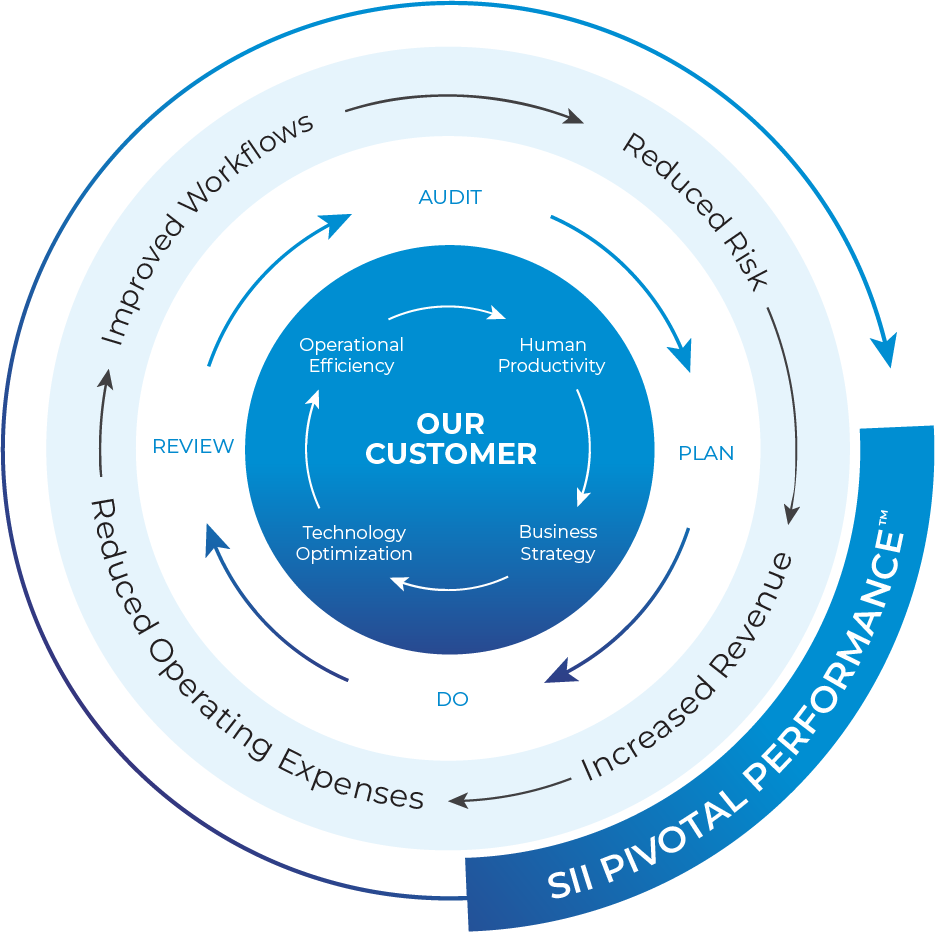
Our Managed IT Operating Model
1
Assess
We review your full IT environment with attention to the compliance dimensions specific to your organization. For defense supply chain manufacturers, we assess your current IT environment against the CMMC practices applicable to your contract data classifications, beginning with an honest evaluation of where you are relative to the requirements. For commercial manufacturers, we assess operational security and cyber insurance readiness. For healthcare practices, we identify HIPAA technical safeguard gaps. For distribution businesses, we evaluate operational system security and enterprise customer security posture. Every Southington client receives a plain-language written summary before we recommend anything.
2
Strategize
We build a technology plan calibrated to each Southington organization’s planning cycle. Defense supply chain manufacturers plan around contract renewal timelines and CMMC assessment schedules. Commercial manufacturers plan around equipment investment and cyber insurance renewals. Distribution businesses plan around contract cycles and market expansion. Healthcare practices plan around patient volume. Agricultural businesses plan around the harvest calendar. The plan is cost-transparent, specific to Southington’s central Connecticut market economics, and realistic about sequencing priorities.
3
Stabilize
We close the highest-priority gaps first. For defense supply chain manufacturers, that means implementing the CMMC Level 1 foundational practices: limiting system access to authorized users and to functions required for their job, controlling the flow of CUI in accordance with authorizations, sanitizing or destroying media before disposal, and the other basic security hygiene practices CMMC Level 1 requires. For commercial manufacturers, it means endpoint security, validated backup, and cyber insurance-required controls. For healthcare practices, it means HIPAA technical safeguards. For distribution and commercial businesses, it means BEC defenses and the security documentation enterprise relationships require.
4
Protect & Manage
Ongoing monitoring, security management, help desk support, compliance maintenance, and vendor coordination. For defense supply chain manufacturers, security controls are maintained and documented continuously with the evidence a CMMC assessment would require. For commercial manufacturers, cyber insurance-required controls are maintained and renewable with accurate documentation. For healthcare practices, HIPAA compliance is maintained. For distribution businesses, operational systems are monitored through working hours. For all Southington clients, IT is handled by our team without requiring the production manager, practice administrator, or business owner to troubleshoot.
5
Optimize & Review
Regular reviews that give Southington’s manufacturing owners, distribution managers, practice administrators, and professional services principals the compliance documentation and IT performance reporting they need. Defense supply chain manufacturers receive CMMC compliance posture documentation for contract and assessment preparation. Commercial manufacturers receive cyber insurance security posture evidence. Healthcare practices receive HIPAA compliance status. Distribution businesses receive operational performance and security posture reporting. Professional services firms receive Connecticut professional conduct compliance evidence. We update the technology plan as each Southington organization grows.
Serving Organizations Across Southington and Central Connecticut
SII provides managed IT services across Southington and the surrounding central Connecticut communities, with structured remote management covering your environment continuously and on-site engineering available from our Wallingford headquarters, approximately 15 minutes from Southington via I-691. We regularly work with organizations across:
- The I-84 and I-691 interchange industrial and commercial areas, the Southington and Plantsville industrial parks, and the Route 10 corridor where Southington’s precision manufacturers, tooling companies, defense supply chain businesses, distribution operations, and commercial employers are concentrated
- Plantsville village center, the agricultural areas along the Southington-Cheshire border where apple orchards and farm stands serve the Connecticut agri-tourism market, the Southington Community Healthcare Center area, and the Route 10 commercial corridor where professional services firms, medical practices, and community commercial businesses serve Southington’s 44,000 residents
- Cheshire, Meriden, Wolcott, and the surrounding central Connecticut communities, as well as Berlin, Bristol, and Plainville, where Southington-based manufacturers serve supply chain customers, where distribution businesses extend their operational reach, and where the I-84 and I-691 corridors connect Southington’s businesses to the Hartford, Waterbury, and New Haven County markets they serve
Bristol’s managed IT page names Southington as a surrounding community it serves. That framing is accurate as geography but understates what Southington is on its own: a precision manufacturing town with a distinct defense supply chain identity, a highway interchange that gives its businesses three-market reach, an agricultural heritage that has made it one of Connecticut’s most recognized rural commercial destinations, and a residential community of 44,000 that deserves IT built for Southington’s specific character rather than borrowed from the pages of its neighbors.
Schedule a free IT assessment and find out what a properly structured managed IT program looks like for your Southington organization.
FAQs
We're a precision manufacturer in Southington and our defense contractor customer just sent us a CMMC requirement. What does that mean for us?
CMMC, the Cybersecurity Maturity Model Certification, is the Department of Defense’s framework for verifying that contractors and their subcontractors protect sensitive federal information. When a defense prime or upper-tier subcontractor passes CMMC requirements down to you, it typically appears in your contract as a clause requiring compliance with DFARS 252.204-7012 or, more recently, with CMMC Level 1 or Level 2 practices. The first question is which level applies. CMMC Level 1 covers organizations that handle Federal Contract Information: basic information provided by or generated for the government under a contract. Fifteen foundational practices apply at Level 1, covering basic access controls, incident reporting, media protection, physical protection, system and communications protection, and system integrity. These are security hygiene practices that most well-managed small businesses should be close to satisfying, though the documentation requirements often catch manufacturers off guard. CMMC Level 2 covers organizations that handle Controlled Unclassified Information, a broader category that includes technical specifications, engineering drawings, and other sensitive program information. Level 2 requires 110 practices aligned with NIST SP 800-171 and will eventually require a third-party assessment by a certified CMMC Third Party Assessment Organization. For a Southington precision manufacturer in a defense supply chain, the practical starting point is identifying which category of information you handle under the contract, reviewing your current IT environment against the applicable CMMC practices, documenting the gaps honestly, and building a remediation plan. We help Southington’s defense supply chain manufacturers work through this process without overspending on controls that exceed what their specific contract and data classification require.
We're a Southington manufacturer without a defense contract. What cybersecurity controls do our OEM customers and cyber insurance require?
The two requirements are converging and increasingly ask about the same controls, which simplifies the answer. OEM and major commercial customer vendor security questionnaires typically ask about: endpoint detection and response software on all business devices, multi-factor authentication on business email and remote access systems, a documented backup and recovery procedure that has been tested with an actual recovery exercise, a written information security policy, and cyber insurance coverage meeting a specified minimum. Cyber insurance underwriters at application and renewal now ask about these same controls, plus network segmentation between business and production systems, employee security awareness training, and a written incident response plan. For Southington’s commercial manufacturers, the practical approach is to implement the controls that satisfy both audiences simultaneously: endpoint security, MFA on all business email and remote access, validated backup with tested recovery, and written security documentation. The documentation requirement is where many manufacturers fall short. A cyber insurance application that cannot produce evidence of tested backup or MFA enrollment creates either a gap that the insurer denies coverage for or inaccurate attestation that voids coverage after a claim. We build IT programs for Southington’s commercial manufacturers that address the OEM customer and cyber insurance requirements as a single program rather than two separate efforts.
We run an apple orchard or farm stand in Southington. Do we really need a managed IT program?
The honest answer depends on what your operation involves, but several common aspects of agricultural and agri-tourism businesses in Southington carry real IT requirements worth understanding. Payment processing is the most universal. If your farm stand, orchard store, or festival booth accepts credit and debit cards, PCI DSS applies to your business and requires that payment systems be on a properly segmented network, that cardholder data not be stored insecurely, and that the devices processing payments not be shared with general business computing. A tablet running your POS that also runs general web browsing is a PCI DSS gap. Farm management software is the second area. Many Southington orchards use farm management platforms for inventory, harvest tracking, customer orders, and CSA management. These systems hold customer data that Connecticut’s Identity Theft Protection Act protects, and the backup and access control requirements for that data are the same as for any small business. Business continuity is the third. For a business whose revenue concentrates in September and October around the apple harvest and the Apple Harvest Festival, an IT failure during peak harvest weeks is a material business event. A ransomware attack that encrypts your customer order database or your POS system during the festival weekend is not a recoverable situation in any practical sense. Right-sized managed IT for an agricultural business does not mean enterprise IT. It means the payment processing security that PCI DSS requires, a proper backup of customer and business data that has been tested, and basic endpoint security on the devices your business depends on.
We're a distribution or logistics company at Southington's highway interchange. What should our IT program address?
Distribution and logistics businesses at Southington’s I-84 and I-691 interchange face IT requirements from two directions: operational reliability and commercial security expectations. On the operational side, the systems that matter most are your transportation management system, any warehouse management platform, and the communications and tracking tools coordinating with carriers and customers. These need to be available through operating hours and recoverable quickly when something goes wrong. A distribution operation that cannot process outbound shipments because its TMS is down creates immediate customer delivery failures that compound with time, and the recovery window for a logistics business is much shorter than for a manufacturer or professional services firm. On the security side, larger shippers and enterprise logistics customers increasingly include security requirements in vendor contracts and send questionnaires asking about endpoint protection, MFA, backup procedures, and written information security programs. Cyber insurance for distribution businesses requires the same foundational controls. The practical starting point is the same set of controls that satisfies both audiences: MFA on business email, endpoint detection and response on all business devices, validated backup with a tested recovery procedure, and written security documentation. We build IT programs for Southington’s distribution and logistics businesses that address operational system availability, enterprise customer security expectations, and cyber insurance requirements as an integrated program.
Does SII serve Cheshire, Meriden, Plainville, and the surrounding central Connecticut communities?
Yes. Many Southington-based organizations serve clients, employ staff, and operate across Cheshire, Meriden, Wolcott, Plainville, Bristol, Berlin, and the surrounding central Connecticut communities. We manage those environments as a unified IT program with consistent security policies, centralized monitoring, and the same support quality regardless of location. For defense supply chain manufacturers with multiple production facilities, consistent CMMC-supporting security controls apply at every location where Federal Contract Information or Controlled Unclassified Information is handled. For distribution businesses with warehouse or delivery operations in surrounding communities, consistent endpoint security and access controls apply wherever operational systems are accessed. For healthcare practices with satellite locations, HIPAA-compliant IT governance applies at every site. Our Wallingford headquarters puts us approximately 15 minutes from Southington, making on-site support across central Connecticut practical and fast.
Southington Makes Things That End Up Everywhere. Its IT Should Be Built the Same Way.
Get a free IT assessment for your Southington organization. We will evaluate your environment against the CMMC, cyber insurance, HIPAA, PCI DSS, OEM customer qualification, or Connecticut professional conduct requirements your specific work carries, and build an IT program for a manufacturing town that has been doing precision work at the center of Connecticut for generations.