

Managed IT Services in Cambridge, MA
IT built for Cambridge’s research-to-commercial economy
Schedule Your IT Assessment
Cambridge is where research becomes companies, and that transition is one of the most IT-intensive moments a technology organization experiences. When a founding team leaves MIT or Harvard with a license to commercialize their lab’s research, they lose institutional IT infrastructure — managed computing environments, research storage, identity systems, and the IT support they took for granted — and gain the obligation to build commercial IT from scratch, usually before they have IT staff, while simultaneously trying to run a business. Most IT providers aren’t built for that specific moment, and the organizations that navigate it poorly often carry the technical debt for years.
SII works with Cambridge organizations at the full spectrum of the research-to-commercial journey. For spin-outs and early-stage companies emerging from MIT, Harvard, and Cambridge’s affiliated research institutions, we build the commercial IT foundation they need the moment institutional support ends. For deep tech, AI, robotics, and quantum computing companies protecting foundational intellectual property before patents are secured, we implement the access controls and endpoint security that prevent the pre-patent disclosures that destroy exclusivity. For federal grant-funded research centers and defense-adjacent technology organizations, we address the export control and research compliance obligations that govern how federally funded technology is stored, accessed, and shared.
Whether your organization is a spin-out or early-stage company transitioning from academic to commercial IT infrastructure, a deep tech, AI, or life sciences research company at the pre-commercial stage protecting discovery-phase intellectual property, a federal grant-funded research organization navigating NIH, NSF, DARPA, or DOD-funded research IT compliance requirements, or a biotech service company, contract research organization, or professional services firm serving Cambridge’s research economy, SII builds an IT program around what your Cambridge organization actually requires.

What IT Failure Costs Cambridge Organizations
In Cambridge’s research-to-commercial economy, IT failure doesn’t always look like a ransomware attack or a system outage. The most consequential failures are quieter: proprietary research accessed by someone who shouldn’t have it before the patent application is filed, a controlled technical document shared with a foreign national without verifying export control status, or a spin-out company that spends three years building its technology on ad hoc IT infrastructure and discovers the problem only when a strategic investor asks pointed questions during due diligence.
- Pre-patent intellectual property disclosure through inadequate access controls or endpoint security at a Cambridge technology company, destroying the novelty required for patent protection at the moment the IP has its highest potential value
- Export control violations when Cambridge technology companies or federal grant-funded research organizations allow access to ITAR-controlled or EAR-controlled technical data by individuals without appropriate export authorization, creating federal criminal and civil liability for both the organization and individuals involved
- Federal research grant non-compliance when research organizations handling NIH-funded human subjects data, NSF-funded research data, or CUI in defense-funded programs fail to meet the data security standards the sponsoring agency requires, risking award suspension or termination
- Investor due diligence failures when spin-outs and early-stage Cambridge technology companies that built commercial operations on academic IT infrastructure can't demonstrate the endpoint security, access governance, and data protection practices that strategic investors and acquirers require before closing
- Competitive intelligence loss when Cambridge deep tech, AI, and quantum computing companies operating in globally competitive research fields have insufficiently secured the foundational research and algorithmic work that defines their technical differentiation
SII builds IT programs for Cambridge organizations that address each of these risk dimensions before they become events that can’t be undone.
Why Cambridge Organizations Choose Managed IT Services

The Academic-to-Commercial IT Transition, Done Right
When a founding team leaves MIT or Harvard, they lose institutional IT infrastructure and gain the obligation to build commercial IT from scratch. We specialize in that transition — building the endpoint management, identity governance, data protection, and cloud infrastructure that replaces academic computing environments with commercial IT foundations appropriate for a company that will need to be investor-ready, regulatory-compliant, and secure from day one.

Pre-Patent IP Protection for Discovery-Stage Research
Cambridge’s deep tech, AI, quantum computing, and life sciences companies often work for years on foundational research before filing patents. During that window, the IP is both most valuable and most vulnerable. We implement layered access controls, endpoint data loss prevention, and network security that protect pre-patent research from the unauthorized access and exfiltration that would permanently compromise exclusivity.

Export Control Compliance in Technology Environments
Cambridge technology companies and research organizations working with ITAR-controlled or EAR-controlled technology must ensure that access to controlled technical data is limited to authorized persons. In a research and technology organization with global talent, that means access controls and monitoring built around export control classifications, not just general IT security best practices. We implement and maintain the access governance that export control compliance requires.

Federal Research Grant Data Security Compliance
Organizations receiving NIH, NSF, DARPA, or DOD research funding carry specific data security obligations tied to their award terms. NIH-funded research involving human subjects data carries HIPAA requirements. Defense-funded research handling Controlled Unclassified Information requires compliance with NIST SP 800-171. We build IT environments for Cambridge research organizations that satisfy the specific data security standards their federal funding sources impose.

Infrastructure for Computationally Intensive Research Workloads
Cambridge’s AI, machine learning, genomics, quantum computing, and computational biology organizations run workloads that place extraordinary demands on IT infrastructure — large-scale model training, genomic data processing, simulation and modeling, and high-throughput analysis pipelines. We help Cambridge organizations architect and manage the cloud and on-premise infrastructure those workloads require, with the access controls and backup integrity that protect the data those computations produce.

IT for Cambridge's Research Economy Supporting Services
Contract research organizations, lab service companies, scientific staffing firms, biotech real estate and facilities businesses, and the professional services firms serving Cambridge’s research ecosystem have IT requirements shaped by their proximity to and service of research-stage organizations — including data sharing agreements, confidentiality obligations, and the security expectations of the pharma and biotech clients they serve. We build IT programs that meet those requirements at appropriate scale.
What Makes SII Different From Traditional IT Support in Cambridge?
Cambridge’s spin-out and early-stage companies plan around research milestones, patent filing timelines, and the funding inflection points that change what IT needs to look like. Federal grant-funded organizations plan around grant renewal cycles and the data security reviews that funding agency site visits include. CROs and research service businesses plan around client base growth and the increasingly stringent security requirements that pharma and biotech clients impose on their vendors. We build technology roadmaps calibrated to each organization’s specific planning horizon, so the IT investment matches where the organization is going, not just where it is today.
In a research environment, a recurring IT problem carries costs that don’t exist in commercial settings. A recurring failure in a research computing environment that causes data corruption in an active experiment may invalidate months of work that cannot be replicated. A recurring access control failure in an organization with export control obligations is a recurring potential violation, not just a productivity interruption. We investigate and permanently fix the underlying cause of recurring IT problems, with documentation appropriate to the compliance environment — including formats that export control officers and federal grant administrators can reference.
Cambridge’s technology and research organizations operate under a compliance landscape that few managed IT providers understand. ITAR and EAR export control requirements govern how controlled technical data can be stored, accessed, and transmitted, with obligations that extend to the nationality and authorization status of individuals with system access. Federal research grants from NIH, NSF, DARPA, and DOD each impose specific data security requirements on award recipients. Massachusetts 201 CMR 17.00 applies to Cambridge commercial organizations handling Massachusetts personal information. We address all of these frameworks within the managed IT program.
Cambridge’s founding teams and research directors often come from academic environments where IT decisions were made for them by university IT departments. They need IT reviews that explain commercial IT obligations in terms of the research and business risks they already understand, not in IT operations jargon. Export control officers need IT reporting that maps access governance to their export control compliance program. Federal grant administrators need IT documentation they can include in grant renewal applications and respond to during site visits. We build our review outputs for each of those audiences.
Our Managed IT Services in Cambridge, MA
24/7 Infrastructure Monitoring
Continuous monitoring of research computing environments, commercial cloud infrastructure, and the endpoint and network configurations that Cambridge’s spin-outs, deep tech companies, and federal grant-funded research organizations depend on, with access logging configured to support export control compliance tracking and federal research sponsor data security audit requirements.
Advanced Cybersecurity Controls
Layered security built for Cambridge’s specific threat profile: data loss prevention and access controls protecting pre-patent research and foundational intellectual property, ITAR and EAR export control-aware access governance ensuring controlled technical data is accessible only to appropriately authorized individuals, endpoint security for organizations with global research teams and export control obligations, and 201 CMR 17.00-supporting data security for Cambridge commercial organizations handling Massachusetts personal information.
Cloud Strategy & Management
High-performance research computing cloud architecture for Cambridge’s AI, machine learning, genomics, quantum computing, and computational biology organizations running computationally intensive workloads, commercial IT cloud buildout for spin-outs transitioning from MIT or Harvard institutional infrastructure to commercial environments, and export control-aware cloud configurations that manage data residency and access governance for ITAR-controlled and EAR-controlled technical information.
Network & Connectivity Governance
High-throughput network infrastructure for Cambridge’s research and commercial technology organizations, with network segmentation that isolates environments handling controlled technical data from general research and office networks, reliable and secure connectivity for organizations with distributed teams spanning Cambridge labs, Boston offices, and remote research staff worldwide, and access controls that enforce the identity-based policies that export control compliance requires.
Business Application Support
Setup and management of the research computing software, laboratory information systems, and scientific collaboration platforms that Cambridge research organizations depend on, commercial SaaS stack implementation for spin-outs replacing academic tools with commercial-grade productivity, project management, and business applications, and the professional services and CRM platforms that Cambridge’s CRO and research economy supporting services businesses rely on.
Remote Workforce Enablement
Endpoint management and access governance for Cambridge’s globally distributed research and engineering teams, with particular attention to the export control obligations that arise when team members in different countries access controlled technical data, secure remote access for spin-out founding teams working across Cambridge labs, Boston offices, and home environments, and device management for CRO field staff working at client research and manufacturing sites.
VoIP & Unified Communications
Business communications for Cambridge’s research organizations coordinating global teams, spin-outs building commercial communications infrastructure to replace the university systems they depended on as graduate students and postdocs, and CRO and research economy service businesses managing client relationships across Cambridge’s dense and demanding professional community.
Data Backup & Disaster Recovery
Backup and recovery programs built around the specific requirements of Cambridge’s research and technology organizations: irreplaceable pre-patent research data protected with integrity verification and tested recovery procedures, federal research grant data retention configurations that satisfy NIH, NSF, and DOD data management plan requirements, export control-aware backup configurations that maintain data residency controls for ITAR and EAR-controlled technical information, and commercial business continuity for Cambridge spin-outs and research service organizations.
Ready to Get Started?
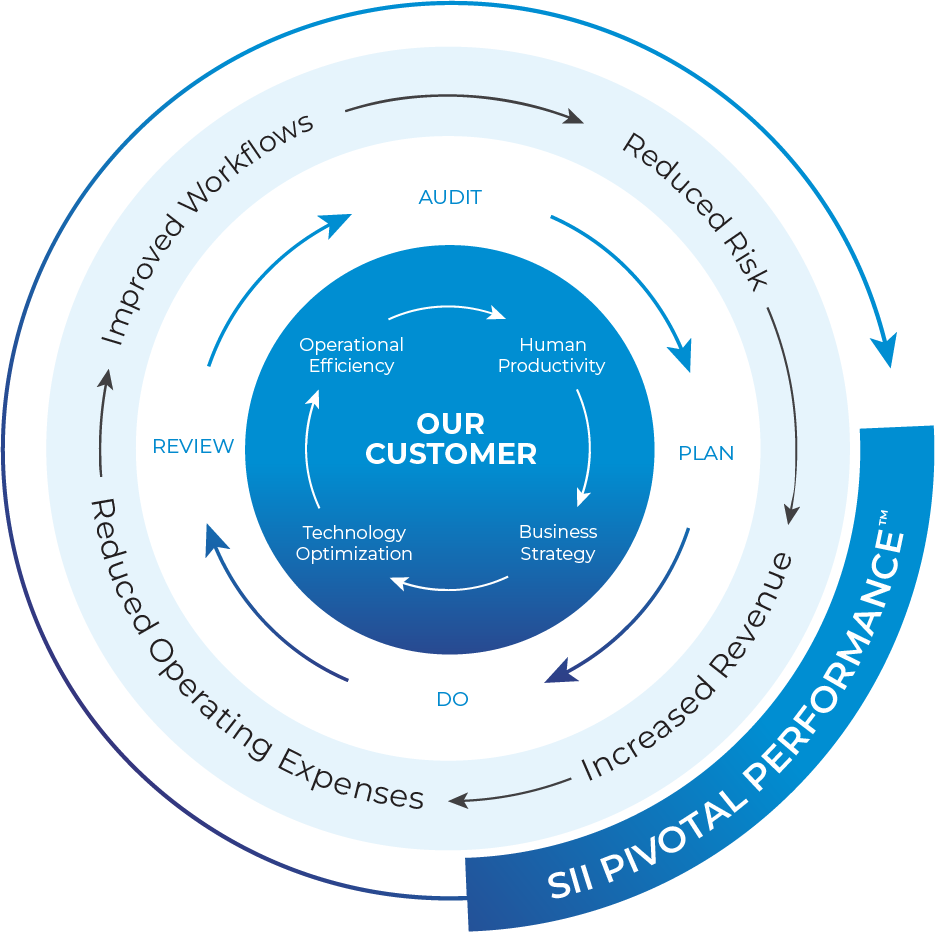
Our Managed IT Operating Model
1
Assess
We review your organization’s full IT environment with attention to the specific compliance dimensions that matter in Cambridge. For spin-outs and early-stage companies, we inventory what was brought from the academic environment, what was left behind when institutional IT support ended, and what gaps exist between your current IT and what commercial operations require. For organizations with export control obligations, we map which technical data is ITAR or EAR-controlled and who currently has access to it. For federal grant-funded organizations, we identify the specific data security requirements your funding sources impose. You receive a written findings summary before we recommend anything.
2
Strategize
We build a technology roadmap aligned to your organization’s specific development trajectory. For spin-outs, the roadmap accounts for patent filing timelines, initial commercial milestones, and the investor-readiness requirements that define what IT needs to look like by specific dates. For organizations with export control obligations, it includes a schedule for implementing or improving access governance. For federal grant-funded organizations, it aligns to grant renewal cycles and the data security reviews that accompany them. For deep tech and AI companies, it plans research computing infrastructure around the computational workloads you’ll need to support.
3
Stabilize
We address the highest-priority gaps first. For discovery-stage companies, that means establishing the access controls and endpoint security that protect pre-patent research from day one. For organizations with export control obligations, it means implementing the access governance and monitoring that ensures controlled technical data is accessible only to appropriately authorized individuals. For spin-outs replacing academic IT, it means building the commercial IT foundation — identity management, device management, and cloud infrastructure — that replaces what the university provided. For all Cambridge clients, we reach a stable, compliant baseline before moving to ongoing management.
4
Protect & Manage
Ongoing monitoring, security management, access governance enforcement, help desk support, and vendor coordination. For organizations with export control obligations, this includes continuous monitoring of who has access to controlled technical data and alerting on access by individuals whose authorization status has changed. For federal grant-funded organizations, it includes maintaining the data security controls that grant sponsors require continuously, not just at renewal time. For spin-outs, it means your founding team can focus on building the company without managing IT.
5
Optimize & Review
Regular reviews structured for Cambridge’s specific leadership audiences. For spin-outs approaching investor milestones, reviews produce the security posture documentation and access governance evidence that due diligence requests require. For export control officers, reviews include access governance reporting that maps to their compliance program. For federal grant PIs and research administrators, reviews produce IT documentation compatible with data management plan requirements and agency site visit preparation. For all Cambridge clients, we update the roadmap as the organization evolves and the compliance obligations shift.
Serving Organizations Across Cambridge and the Surrounding Research Corridor
SII provides managed IT services across Cambridge and the surrounding Greater Boston research and technology communities, with structured remote management that covers your environment continuously and on-site engineering available for infrastructure projects and installations. We regularly work with organizations across:
- Kendall Square, East Cambridge, and the MIT campus corridor — including MIT-affiliated spin-outs and research centers, deep tech and AI companies, biotech service organizations, and the professional services firms embedded in Cambridge’s research economy
- Harvard Square, Cambridge Innovation Center, One Broadway, and the Alewife and Porter Square commercial areas where early-stage companies, research institutes, CROs, and professional services organizations serving the Cambridge ecosystem are located
- Somerville, Watertown, Arlington, and the adjacent communities where Cambridge-based organizations maintain overflow lab space, satellite offices, or manufacturing and production facilities as they scale beyond Cambridge’s dense core
Cambridge’s research and technology organizations have sophisticated expectations for how IT support works. They expect continuous remote management, proactive monitoring, and expert response — not reactive on-site visits for problems that shouldn’t have happened. We deliver that model as a matter of course. When on-site work is needed for lab infrastructure, hardware installations, or network builds, we plan those visits as coordinated projects. The Cambridge clients who benefit most from our program are organizations that need the compliance depth to handle export control obligations, federal research requirements, and pre-patent IP protection — requirements that general-purpose IT providers haven’t built expertise around.
Schedule a free IT assessment and find out what a properly structured managed IT program would look like for your Cambridge organization.
FAQs
We just spun out of MIT. What IT do we need to build right now, and what can wait?
The moment a company separates from MIT or Harvard, three categories of IT need to be built immediately and can’t be deferred. The first is identity and access management — your team needs commercial email, authentication systems, and a way to control who has access to what. Academic email addresses and shared university credentials don’t work as a commercial business, and using them creates both operational and security gaps. The second is endpoint management — every device your founding team uses needs to be under commercial IT governance, because once you have company data on personal devices with no management policy, you’ve already created the endpoint security gap that will concern every future investor and customer. The third is data protection — if your business is built on IP from the lab, the access controls and backup configurations protecting that data need to be commercial-grade from day one, not academic-grade. What can wait is everything else: advanced threat detection, complex network architecture, and most application infrastructure can be built over the first year as the business model clarifies. The foundation can’t wait.
Our technology is subject to ITAR or EAR export control. What does that mean for our IT systems?
ITAR (International Traffic in Arms Regulations) and EAR (Export Administration Regulations) restrict who can access controlled technical data — and in an IT context, that means your systems need access controls that enforce those restrictions. Specifically, ITAR-controlled technical data cannot be accessed by foreign nationals unless they hold the appropriate export license or fall within a regulatory exception. EAR controls have similar but generally less restrictive requirements depending on the Export Control Classification Number of the technology involved. In practice, this means your IT environment needs role-based access controls that can be mapped to the citizenship and export authorization status of each user, audit logging that creates a defensible record of who accessed controlled data and when, and monitoring that can detect and alert on access by individuals whose authorization status changes. We assess your technical data against applicable export control classifications, implement the access governance your obligations require, and maintain the audit trail that demonstrates compliance during voluntary disclosures or government reviews.
We receive NIH and NSF grants. What data security requirements come with federal research funding?
The specific data security requirements depend on the funding source and the nature of the research. NIH grants involving human subjects data carry HIPAA requirements for any individually identifiable health information collected or used in the research. NIH also requires grant recipients to have a data management and sharing plan that addresses how research data will be stored, protected, and eventually made available or archived. NSF grants have data management plan requirements that address data security, though the specific controls required vary by program. DARPA and DOD-funded research that involves Controlled Unclassified Information requires compliance with NIST SP 800-171’s 110 security controls — the same framework that CMMC is built on, applied in an academic research context. We work with Cambridge research organizations to identify which data security requirements apply to each funding source, implement the specific controls required, and maintain the documentation that grant renewal applications and agency site visits require.
How do you actually prevent pre-patent IP disclosure through IT security?
Pre-patent IP protection in an IT context comes down to three disciplines. The first is access governance: who can reach the research data, from which systems, under what circumstances. We implement role-based access controls that limit access to active research data to the individuals who need it for their current work, and we review those access permissions regularly as team composition and project assignments change. The second is endpoint data loss prevention: we configure controls that limit the ability to extract research data to unauthorized destinations — including restrictions on copying to personal cloud storage, external drives, and unapproved email. This is the control that catches the scenarios most founders worry about, including the departing researcher who tries to take research output with them. The third is audit logging: we maintain detailed logs of who accessed what data and when, so that if a potential disclosure event occurs, you have a complete record for any patent dispute, trade secret litigation, or investor inquiry. These three disciplines together create a layered defense appropriate to the actual threat model of a pre-patent Cambridge technology company.
We're an AI or deep tech company running large-scale computational workloads. What does managed IT look like for us?
AI and deep tech organizations in Cambridge have an IT profile that doesn’t fit standard managed IT templates well. The computing infrastructure question — whether to use on-premise GPU clusters, cloud-based training infrastructure, or a hybrid of both — is a technical architecture question as much as an IT question, and the right answer depends on your specific workload, team size, and data sensitivity. We help Cambridge AI and deep tech organizations make those architectural choices deliberately rather than by default, with attention to the total cost of different approaches, the security implications of where training data and model weights live, and the access governance that should govern who can reach production model infrastructure versus research infrastructure. Beyond the compute architecture, the standard IT requirements still apply: endpoint management for your engineering team, identity governance, collaboration infrastructure, and the data protection measures that protect the research output your compute investment generates.
The Work Happening in Cambridge Is Too Important for Generic IT.
Get a free IT assessment for your Cambridge organization. We’ll evaluate your environment against the specific compliance obligations and IP protection requirements your work demands — export control, federal grant data security, pre-patent IP protection, or the commercial IT foundation a spin-out needs to build — and show you what managed IT looks like when it’s designed for research-stage and research-adjacent organizations.